





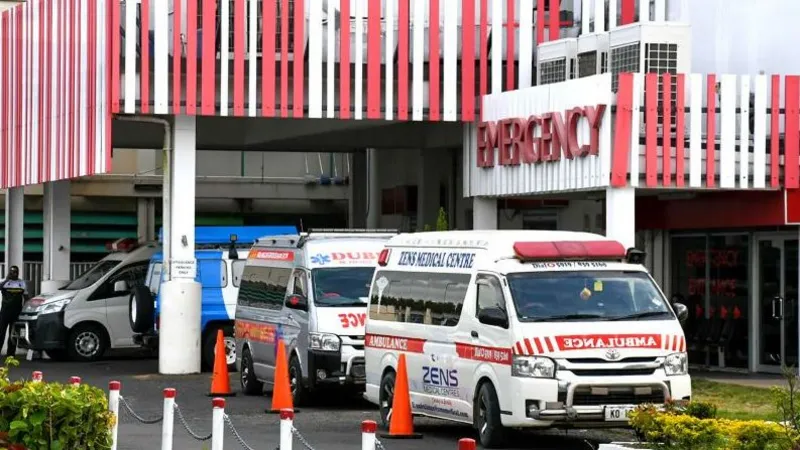
Fiji has declared HIV a national emergency as infections continue to rise, with the government moving to expand access to testing, treatment and prevention.
Health Minister Antonio Lalabalavu disclosed on Thursday that the country recorded 2,016 new infections in 2025 alone, stressing that “an outbreak-level response is no longer sufficient”.
In the small Pacific nation of less than a million people, about one in 60 adults is now living with the virus, compared to one in 167 five years ago. Health experts say a growing number of babies are also dying from HIV-related complications.
The surge is linked to rising drug use, unsafe sex, needle sharing and the practice known as “bluetoothing” or “hotspotting”.
The term describes a dangerous practice where intravenous drug users inject the blood of someone already intoxicated, a trend that has driven HIV spread in parts of Africa and the Pacific. Its appeal is linked to a cheaper high, where several users contribute for one hit and share it, and the fact that it requires only one syringe, which is hard to get in Fiji.
As part of its emergency response, the Fijian government will introduce a needle and syringe programme. Lalabalavu said the country already has enough supplies, with legislative amendments to be presented in parliament to allow the rollout.
He also called on citizens to get tested, saying: “No one should be ashamed, threatened, or excluded because of their HIV status. Stigma drives people away from the very services that can help them.”
Data from the Joint United Nations Programme on HIV and Aids (UNAIDS) shows that of the 9,100 Fijians living with HIV in 2025, only 39% knew their status and just 22% were on antiretroviral treatment. This is far below the global average of 78% treatment coverage.
The head of the national HIV response taskforce, Jason Mitchell, said it will take “upwards of five years for to get on top of the epidemic”.
In an interview with ABC News, he said, “It’s a long-term programme, it’s not something like Covid that’s turned around in two years. HIV is very different.”
Mitchell added, “For a health system that’s already struggling, to have people who should really be well because there’s treatment available taking up beds in hospitals and sitting in outpatient… Our clinical services has really been under a lot of pressure.”
UNAIDS welcomed the declaration, saying it signals the urgency needed to scale up response across government and society.
Executive Director of UNAIDS Winnie Byanyima said, “It is also a stark reminder to the world that Aids is not over. HIV epidemics can change quickly, and countries need health and community systems that are ready to respond urgently.”








Leave a comment